

The Masterpiece: The Ceiling of Sistine Chapel




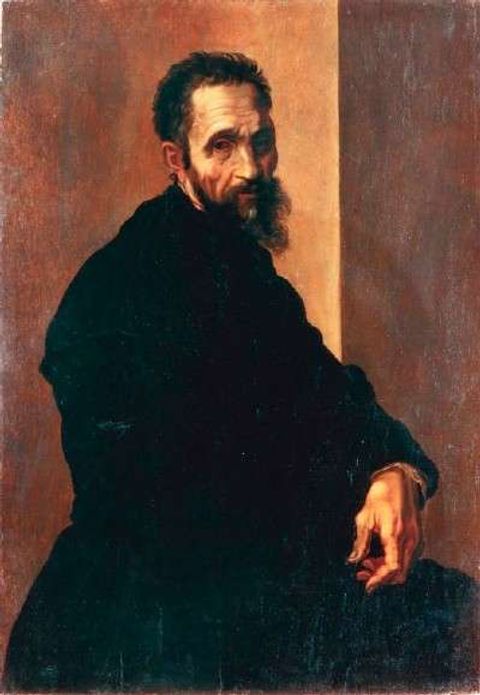
Michelangelo’s masterpiece, a project that was both challenging and intriguing, can largely be accepted as the ceiling of the Sistine Chapel. The artist was not really trained in painting frescoes, yet he could not refuse the request of Pope Julius II. The pope, a very famous patron of arts, wanted only Michelangelo’s touch on the ceiling even though he knew that this would be an open challenge for him. Michelangelo worked day and night, attempting a successful painting of the frescoes. He worked on the ceiling for four years from 1508 to 1512. The project was emotionally torturous for the artist. He states, "After four tortured years, more than 400 over life-sized figures, I felt as old and as weary as Jeremiah. I was only 37, yet friends did not recognize the old man I had become."
Because the ceiling was so high, the artist spent numerous hours sketching the figures on sheets of paper. He ensured that the figures were perfect before they were painted on the frescoes. He applied paint on wet plaster on the ceiling standing upright. His assistants and he used wooden scaffolds that allowed them to stand upright and reach the ceiling above them. The ceiling, more than 3,200 square feet, stood very high above Michelangelo, making it extremely difficult to decorate through painting. The artist decorated the vault with scenes from the Old Testament. In addition, the narrative begins at the altar and is divided into three sections. In the first three paintings, Michelangelo tells the story of The Creation of the Heavens and Earth. The second section encompasses the story of The Creation of Adam and Eve and the Expulsion from the Garden of Eden. The third section depicts the story of Noah and the Great Flood.
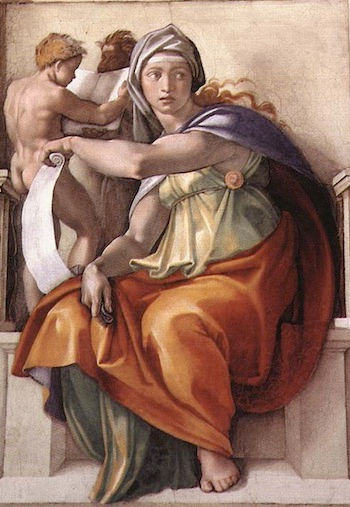
Furthermore, nude youth are placed around these frescoes with sibyls and prophets accompanying them. The Creation of Adam is one of the most famous frescoes of the chapel, where God and Adam are reaching towards each other with their hands stretched out. Moreover, Michelangelo painted scenes of The Salvation of Israel in the four corners of the room. In The Deluge, the artist depicted smaller, multiple figures that were engaged in a complex narrative. Michelangelo used water and sky as factors which divided up the story into four parts. The part on the right depicts a group of people who seek sanctuary from the rain under a shelter. On the left side, people climb up a mountain for survival. In the center, a boat shatters due to the heavy downpour. In the background, a group of people are building an arc.
In addition, Michelangelo depicted The Last Judgment on the ceiling years later due to the request of Pope Paul III. The painting, about forty-five feet by forty feet, depicts Christ’s damnation of sinners and blessing of the virtuous. The painting is regarded as a masterpiece of early Mannerism.
The ceiling of the Sistine chapel was preserved quite well in the past centuries. Only the part of the sky depicting Noah’s escape from the flood is missing. In the 1980s and 1990s, the ceiling went through restoration by experts. Specialists dissolved layers of grime, soot, and deposits. In addition, they brightened the colors of the paintings.