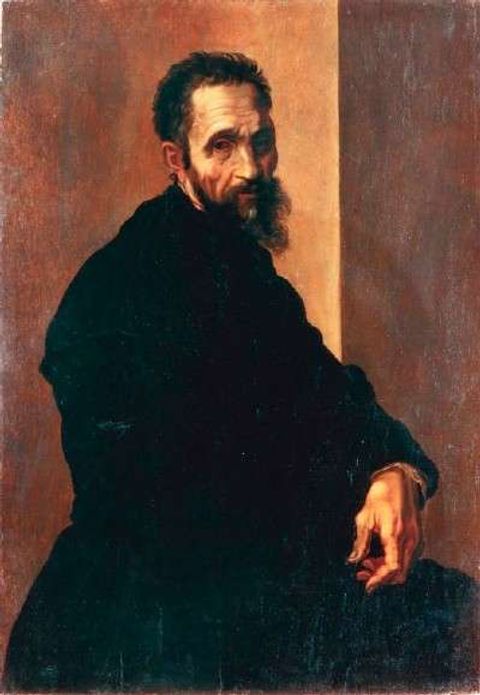


Lorenzo de Medici
Lorenzo de Medici, the greatest of the Medici, left a beautiful legacy behind him. After succeeding his father, he continued the legacy that his grandfather started. He magnified the city of Florence by patronizing the arts. By placing a gracious amount of money on valuable artists, he had numerous things built, which glorified Florence. The city experienced a complete cultural revolution and entered the Renaissance Era quickly before others.
Lorenzo had a huge hand in Michelangelo’s success as well. He created a school of sculpture in his garden at San Marco. He had seen Michelangelo’s earlier works and bestowed him with an opportunity for studying at his school. The young artist accepted this chance and gladly attended the school where he excelled.
Lorenzo gave power in the hands of the elected officials and did not obtain an official government seat. He did, however, use his wealth as a manipulating tool. His monetary power influenced the people in the government and their decisions. As a result, he held a lot of power in the political affairs of Florence.
His power, however, did not last too long. The Dominican monk, Savonarola, openly denounced the Medici family and the papacy. People began listening to his sermons, and his words, gradually, became a powerful influencing tool. Lorenzo was extremely ill during this time and he died at a very young age in 1492.

Giuliano della Rovere was elected to the papal seat in 1503. Julius II, as he was named, was very old when he came to power. Everyone underestimated his reign, but he restored the papal state to greatness. He used his authoritative powers for increasing political, social, and military activity. He became a very active patron of the arts and chose some of the best artists in the Renaissance era. He hired Michelangelo for repainting the ceiling of the Sistine Chapel and for building the tomb of Julius II. The tomb is held in San Pietro in Vincoli. In addition, he hired Bramante for building a new basilica of Saint Peter’s in place of the old one. Furthermore, Raphael painted four rooms in the Vatican for Julius.
Pope Julius II achieved a lot politically as well. He formed the Holy League in hopes of freeing Italy from French invasion. The League included Venice, Spain, England, Switzerland, and the Holy Roman Empire. He successfully kept the ambitions of the league alive, but shortly after his death, the league dissolved.
In addition, he fulfilled his duties, as a leader of the church, to the best of his ability. He issued a bull against simony at papal elections, made various monastic reforms, founded a school for ecclesiastical chant, and convened the Fifth Lateran Council for the eradication of corruption and schisms from the church.
Pope Julius II
